
Checkmark, our 30th National Park!
Duh! Big Bend refers to the great U-turn the Rio Grande makes through Southwestern Texas. You’ll probably get a chuckle out of this, but I didn’t know that until six months ago when we were planning this trip. I knew of the National Park, and all the great birding, but never even thought for a second why it’s named Big Bend.
Bluebonnets, everyone has heard of them, right? I was so fired up to see them. The Texas state flower, a thing of songs, books, and poetry, near mythical status in my mind. Boy was I let down when I first saw some, they are just Lupine! There are five species of Lupine in Texas and all are considered Bluebonnets. Yes, they are pretty, especially fields of them, but they are just Lupine, and I had no idea.
We stayed in Terlingua which is situated between Big Bend National Park and Big Bend Ranch State Park. This isn’t a slight in anyway; it reminds me of Mexico…beautiful, rugged, underdeveloped, stray dogs, and not a lot of conveniences. Heck, the celIular network is still 3G. I thought that was phased out a long time ago.
We enjoyed our time here. Big Bend NP is kind of like Death Valley NP in the fact that it’s huge and requires a lot of driving. There are three distinct areas: the Rio Grande, the desert, and the Chisos Mountains. Even though Big Bend Ranch State Park is close to the National Park, it is quite different, I might even say prettier.
Lucky us! We saw two new birds: the Mexican Jay and Pyrrhuloxia (don’t ask me to pronounce it). Seven days equals a long post with a lot of pictures, so settle in with your favorite beverage and enjoy the trip.


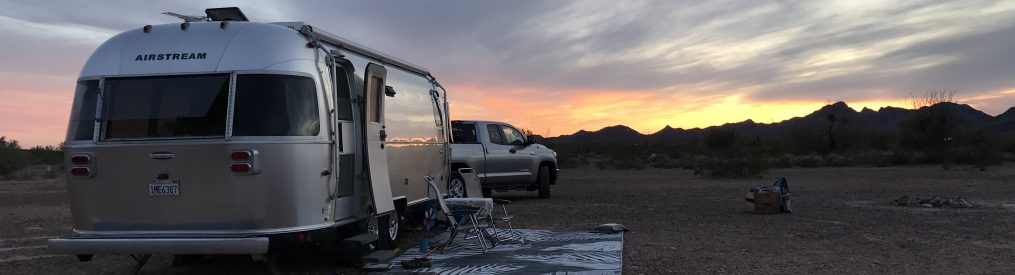
Road Runner Travelers RV Park, site 29, where the weather ran the gamut, but the wind was constant.


The stray camp dog was friendly enough, but no one was picking up his poop. The water tanks were right next to our site.

Mule Ears, aptly named mountain. This was our first hike in the desert region.

The Ocotillo were all blooming, yet none of them had leaves. We were told that photosynthesis occurs in the green parts on the branches.

Here it is folks, a Texas Bluebonnet aka Texas Lupine.

Coves’ Cassia

The Rio Grande and Santa Elena Canyon


Copper Globemallow; we love Mallow, so it was really cool to see a new one.


Candelilla (little candles). This inconspicuous plant has quite a history. The stems are covered with a thick, flaky coat of wax that can be harvested and used to make candles. During both World Wars the wax was used to waterproof military tents among other things.


Lajitas Trail system was well signed with big views and fun single track, but a little too much fire road and wind for Ameila.

We went into the State Park twice, once for a hike and once for a fabulous bike ride.

The hike was called Closed Canyon, their idea of a slot canyon. We joked that they should have a disclaimer: if you spent seven weeks in Southern Utah doing slots, just skip this hike!

The turn around point, maybe this is why it’s called Closed Canyon?

Amelia navigating the fuchi water.


The ride we did in the State Park was on the East Contrabando Trails, huge vistas and fun single track.


The trails were also well signed and this one was a treasure…a hill of calcite crystals.


The common name for these cacti are Horse Cripplers.


Ariocarpus fissuratus, the living rock cactus. I usually don’t toss in the latin name, but our friend Laurie identified it, so in her honor, I included it. It grows only in the Big Bend region of west Texas. It was a really fascinating succulent. In the fall it gets large pink-purple flowers.
We spent one day canoeing the Rio Grande. It was a little disappointing because the water level was so low, only inches deep in some spots. Twice I had to get out of our canoe to drag it across rocks. It wasn’t exactly a peaceful float the whole time. Unbeknownst to us, on the same day, NY Times had an article titled How Do You Paddle A Disappearing River? Nonetheless, we are glad we experienced it.

Our entry point

Eight canoes and one solo English chap in a kayak on our tour. The English chap does a lot of business travel and works in playtime. He always goes on a tour the first day to gather info on what to do in the area, then plans the rest of his time accordingly.

We stopped at the hot springs for lunch. It was quite delightful.


The river was so low Amelia walked across it never getting more than shin deep, then walked around on the Mexican side.

Post lunch we went through this beautiful stretch with a view of the Sierra del Carmen Mountains.

A Mexican horse in a make shift corral.
The day we went to explore the Chisos Mountains the temperature literally dropped 20 degrees which made it in the 60s at the RV Park, but in the 40s for the start of our hike. And surprise, it was windy! Totally worth it though.


Gorgeous views on the Window Trail hike in the Chisos Mountains.


Texas Mountain Laurel and Mexican Buckeye were blooming as we approached the Window.

Some hard work went into the trail and it was appreciated.

The Window


A little extra hike on a side trail provided a view above the Window and this lovely Scarlet Hedgehog Cactus in bloom.


The Prickly Pear Cactus was blooming all over both parks.


Texas Rainbow Cactus


Yellow Stingbush and Featherplume

Adios Terlingua
🐇🐇 Have a Hoppy Easter! 🐇🐇
Loved seeing the mountains, canyons, trails, Texan Lupine (!) or Blue Bells …The Window! The Above the Window, other Texan plants/flowers.Very beautiful and narrative was very interesting. Loved the tour~ Thanks!
Love the pics and your narrative.
Plus, I did not know what Big Bend referred to…now I know! So cool you spent some time on the river.
Thanks for all the comments Sharon! I’m glad I wasn’t the only one that didn’t know what Big Bend referred to 😀